Explore your writing at HFWW’s Festival 2026 on JUNE 5, 6, &7. We will offer writing craft workshops presented by our Participating Writers.
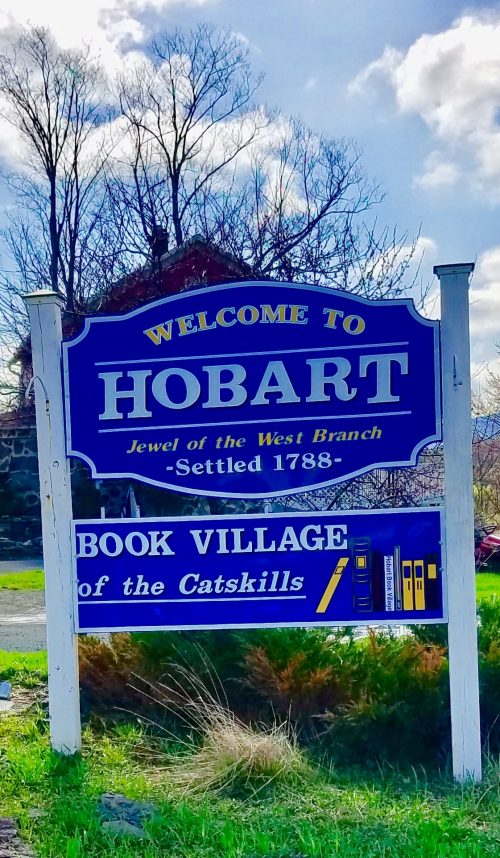
These two-hour sessions cover a range of topics and are suited to writers of all stages of development. Are you eager to jumpstart a project? Or are you simply eager to hear and discuss what others are writing about?
Put your oars in the water. Come and join us. Check out our lineup.
O Taste How Good It Is! Using Food Imagery in Poetry with Jennifer Bartell Boykin
Collard greens, okra, fried chicken, company chicken, pileau (pronounced perlo), sweet tea, pound cake, and more appear throughout my poetry. Each dish is important to my experiences with my family and my community. Think of the dishes that are staples for you. What are the memories you have of that food? How do you feel while eating it?
Who are you with? The tastes, textures, and smells are the menu for memory, emotion, and therefore poetry. In this workshop, we will explore the connections between food, memory, and poetry. We will read poems with food in them, go through 3-4 memory exercises, and examine the essay, “What Does Food Have to Do With Poetry” by Dorothy Chan. Come prepared with notes or lists of 1-2 dishes/food and any memories associated with them. Family recipes may prove useful as well. Poets will leave this workshop with 2- 3 poems in progress.
How to Use Discouragement as a Motivating Tool with Christina Chiu –
“Together, I will show you how to use discouragement as a motivator and provide a system prototype.” – Chiu.
Rejection can be crushing. Even successful authors struggle with discouragement sometimes. But how do some writers succeed more readily than others? The answer, in part, is resilience. As editor Tom Lutz pointed out in a discussion with author Amy Liu and her students, “Women typically submit once, and if we reject their work, we never hear from them again, even if we tell them we liked their submission, even if we give them feedback, even if we specifically invite them to try us in the future. Let’s change that. Stop letting “business” interfere with the personal creativity in you. Whether you are submitting stories to journals, novels to an agent, or writing applications to writing residency programs, start writing and submitting fearlessly and get your work out into the world. This workshop will discuss strategies, give practical advice (yes, if you have ADHD, I’m definitely speaking to you), and share systems that will bypass overwhelm and change the approach to the submissions process. During the workshop, participants will individualize a framework that works specific to their needs and will have the chance to re-submit one of those rejected stories that have been tucked away.
Stephanie Cotsirilos
Writing Later in Life: Secrets and the Sacred – How and Whether to tell
Here we are, writing later in life- or about to do so. Our goals may vary widely, and we’ll briefly share them. We’ll also ask: What do we do with our secrets? With elements of our lives that feel sacred? Or as Gwendolyn Brook’s main character in Maud Martha asked, “What, what, am I to do with all of this life?” The answer is ours to shape from where we find ourselves. Participants will supportively consider these questions, then engage in writing exercises that explore craft options for approaching secrets and sacred things. We’ll brainstorm next steps. Stephanie will provide a digital bibliography.
Streets and Alleys: Journeying to Your Own Ten by Ten with Sandi Dollinger
In this workshop, writers will use streets and alleys of their past and present to conjure up material for a short, one-act play called a “Ten by Ten.” Participants will read from modern plays to examine basic building blocks and the underbelly of what makes a play. From there, participants will proceed on to their own individual play-making, using a variety of writing exercises and theatre games to help craft monologues and scenes. At the session’s end, there will be time for anyone who wishes to share what they have written.
Lyndsey Ellis
Writing Real Without Forfeiting Care
As Toni Morrison once stated, ‘Oppressive language is dead language.’ A story can move its readers, but if it’s at the expense of an entire community, it causes unnecessary harm that sometimes can’t be reversed.
Writing Real Without Forfeiting Care is a workshop that highlights the value of crafting dignity-centered narratives that offer accurate character portrayals by recognizing differences, adversity, or trauma without reducing excluded groups represented in literature to caricatures, victims, or otherness. Participants will look at language-shifting contemporary texts-The Night Watchman by Louise Erdrich, Castaway Mountain by Saumya Roy, and The Icarus Girl by Helen Oyeyemi that balance honesty with sensitivity in depictions of historically resilient voices. Get suggestions on ethical storytelling practices that honor community experiences without reinforcing wounds, as well as in-class writing exercises.
Deep Gaze: Painting & Sculpture As Helpmates for Writing with Margot Farrington
Geared for poets and writers at all levels of ability. How can painting and sculpture help us create new works, especially when we may feel blocked? Come experiment and explore how to use painting and sculpture as a portal into writing poetry or prose. First, participants will look at examples of how others have been inspired as they embark on the study of a few selected poems. Next, participants will discuss and put to use strategies for generating their own poems or prose, linking the leaps of see/feel/write. Two examples of text to be used are: “Young Woman Knitting” by Moira Linehan, and “Dream” by John Ciardi. Paintings providing the impetus for these works are: “Young Woman Knitting” by Berthe Morisot, and “The Sleeping Gypsy” by Henri Rousseau. Participants will take away writings to continue and complete, and will gain insights into looking at art.
with Blair Hurley
Finding Your Ending with Blair Hurley
Finding the right ending for your story might be the most difficult part of the writing process. We need to thread the needle with theme, magic, metaphor, and character, all without being too preachy or heavy-handed. In this workshop, participants will look behind the curtain of great story endings and adapt what they discover to their own endings. Participants will work on fitting resonant images and powerful character choices into story endings- all while balancing the bitter and the sweet. They will read examples of great stories and discuss what makes them great (readings may include works by Jennifer Egan, John Steinbeck, Toni Morrison, Richard Ford, James Joyce, Sandra Cisneros, and others). Participants will engage in practical exercises to revise their own endings. This two-hour workshop is perfect for beginning or intermediate writers in the process of drafting novels or short stories. Participants will come away with a new ending for their story or novel drafted.
On Collaboration: Connecting the Tradition of Japanese Poetic Forms and Practice with Miho Kinnas
Workshop participants will gain knowledge about Japanese literary history, especially about the development of short poetic forms from the eighth century to the present, with emphasis on the importance of literary communities and connections with other influential arts, such as martial arts, flower arrangement, and tea ceremony. (Waka, tanka, haiku, haikai, senryu, and especially renga. Aesthetics.) This will be followed by hands-on writing
Linda Lowen
Scene and Done: Understanding Story Through the Four Elements of Scene
How much is too much description? Where should interiority and flashback be employed? Is action necessary? The answers lie in the pattern of the story, and understanding that pattern is best done through deconstruction. To deconstruct a quilt, you separate the blocks, then disassemble each block into its component pieces. Writing is similar: a short story or book is a series of scenes, and scenes involve key elements intentionally placed. Drawing from the scene/structure work of Jack Bickham, learn the four key elements of scene through the study and deconstruction of a short work. Then use those elements in your own short piece. The workshop consists of a short lecture, group reading of a flash memoir, time for individual deconstruction of elements, group discussion and analysis, and closes with a writing exercise to apply these concepts.
Ellen Meeropol
Innovative structures for politically engaged fiction
Writing fiction that illuminates life under the shadow of climate apocalypse, the threat of nuclear annihilation, and fears of increased political turbulence both locally and globally is enormously challenging. Artists and writers have linked the chaotic and terrifying state of the world to the trend toward abstraction and fragmentation as methods to express internal turmoil and political angst. In this workshop, participants will look at examples of inventive narrative structure in contemporary novels, including the use of speculative elements, magical realism, and constellation and mosaic novel structures. They will brainstorm shaking up our own work trying out these techniques and forms.
Marketing Your Book in a Crowded Marketplace with Stephanie Nikolopoulos
Marketing budgets are shrinking across publishers, even as 3 million new titles hit the shelves each year. How can you make your book stand out? In this practical workshop, participants will discuss marketing strategies for self-published and traditionally published authors, including how to start building your audience before you draft your first chapter; maximize visibility for your backlist while promoting new releases; and unlock opportunities through newsletters, readings, and more-and how to use Al as your marketing assistant. Come ready to roll up your sleeves: after reviewing insights from authors like Jane Friedman and Susan Shapiro, participants will draft a book synopsis, author bio, and social posts they can use right away.
A generative session on pantoums with Kim Roberts Meikle
Pantoums work well with writers at all experience levels, introduce writers to a traditional verse form that may be new to them, and provide craft lessons on the power of repetition. Roberts will introduce the form, provide a handout of examples participants can read and discuss as a group, and then give participants time to write in class. Participants will be invited to share what they’ve written. A pantoum is a Malaysian verse form consisting of quatrains, or four-line stanzas. Lines two and four of the first stanza are repeated as lines one and three of the subsequent stanza. The number of stanzas may vary. Pantoums often end with the final stanza picking up to the two lines from the beginning stanza that were not repeated. Kim will select examples by women poets, making sure to have a range that includes queer women, women of color, and disabled women.
What’s in a Name? with Jo Salas
Whatever we write, especially if it’s fiction, we try to find the most fitting, appealing, effective names for our characters and for our books or short stories. Names do a lot of work for our readers. They can evoke personal and cultural characteristics. They can signify ethnicity, gender, class, historical period, and geographical location. In memoir and other nonfiction we may have to invent character names to protect identity while keeping the quality of the original name.
Book titles can be concrete or conceptual (think Mrs. Bennet’s Five Daughters instead of Pride and Prejudice), poetic, elliptical, punning, allusive, purposely irritating, short or long.
As a writer, you’re likely to spend many hours pondering these questions and trying out different names (thank goodness for search and replace!). Then you’ll probably find that your agent and publisher have their own ideas, especially about book titles.
In this workshop for aspiring and published writers, we’ll review character names and book titles from literature, and experiment with your own character names and titles. Looking at published authors’ choices can illuminate your own thoughts about your current writing-or simply deepen your appreciation for this essential dimension of writing and reading.
Love Poetry Through the Ages with Lisa Wujnovich
What makes a love poem, wedding poem, courtship poem, erotic poem, declaration to the divine, praise poem to earth? Deceptively easy until you try to write one. Participants will write some of their own, but first look at some of the great love poems through the ages: Shakespeare’s sonnets, Rumi’s ghazals, Yeats’ Romantic rhymed verse. They will look at Oliver’s nature poems, Angelou’s free verse, as well as those of Andrea Gibson and Ross Gay, among others. Participants will practice using imagery, symbolism, and figurative language to listen for words of love.
Two of our founding Participating Writers return with Special Workshops:
Bertha Rogers
Family Poetry / Art Workshop
This 2-hour workshop for parents and children (kids ages 8-16) begins with brief readings by the leader, after which the participants write poems that begin with “I wish I were. ..” or “When I was…”.
When the poems are complete, kids and parents will read them out loud, then plan and make miniature artist books. All materials (pencils, paper, scissors, markers, crayons, etc.) will be supplied.
Esther Cohen
Good Stories Intensive Workshop
Writing is what so many of us want to do. Finding the stories we want to tell, and then writing them, is what the work together in The GOOD STORIES INTENSIVE with the phenomenal novelist and poet, Esther Cohen, will be. Some of us are beginning. Some of us are continuing. Together, participants will all be looking for stories, good stories, working together to understand what good stories are and where they come from. Participants will examine how we tell them, and then will tell them. Using exercises and prompts, and reading and hearing examples from other writers, this special SIX-HOUR WORKSHOP will be an investigation into narrative, using what we know and what we don’t know to figure out what stories we will tell. A box lunch is served to participants. Each participant can expect a deeply inspirational and restorative journey to the heart of writing craft.
REGISTRATION FOR HOBART FESTIVAL OF WOMEN WRITERS 2026 OPENS ON EVENTBRITE ON MAY 1, 2026
This project is made possible with funds from the Delaware County Arts Grants, a regrant program of the New York State Council on the Arts with the support of the Office of the Governor and the New York State Legislature and administered in Delaware County by the Roxbury Arts Group.
If you want to support our work, we can use your help. As public arts funding has become more scarce, we depend even more on our friends, neighbors, family, and all lovers of language. Donate at https://www.gofundme.com/f/support-the-hobart-festival-of-women-writers. We appreciate ALL donations. Thank you.

